Causeway to the Cosways
Establishing Connection between Forms of Identity and Consequent Reconstruction of Destiny through Subversion of the Bildungsroman in Wide Sargasso Sea
DOI:
https://doi.org/10.5958/2347-6869.2018.00005.5Keywords:
Grand narrative, contrapuntal, bildungsroman, reverse-bildungsroman, kunstlerroman, artist, madness, double, victorian sensationalismAbstract
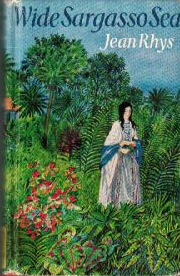
Jean Rhys’ Wide Sargasso Sea has usually been regarded as a postcolonial offset to its 19th century ‘Grand Narrative’ – Charlotte Bronte’s Jane Eyre. Both the texts have been by and large examined by critics as texts employing the format of the Bildungsroman, also popularly known as the ‘coming-of-age’ novel. Rhys’ work, through the account of Antoinette Cosway’s life, subverts this typically linear, male-centric genre, to formulate what we may phrase as the Anti- or Reverse- Bildungsroman. In conjunction with the previous perspective, this paper shall explore how Wide Sargasso Sea overturns even the Reverse-Bildungsroman at the end of the novel to set up the groundwork for yet another sub-genre, the Kunstlerroman, or the novel that documents the formation of an artist, and the simultaneous subversion of the associated tenet of the ‘double’ in Victorian Sensation formula, when Antoinette paradoxically gains a form of identity, an autonomy over her own life, and appropriates active agency, much like an artist, through madness, and ultimately, death.
DOI: 10.5958/2347-6869.2018.00005.5
Downloads
Downloads
Published
Issue
Section
License
Copyright (c) 2018 Isha Biswas

This work is licensed under a Creative Commons Attribution-NonCommercial 4.0 International License.
Revised Copyright/CC license that applies to all the articles published after 05-02-2017
Attribution-NonCommercial 4.0 International (CC BY-NC 4.0)

Copyright/CC license that applies to all the articles published before 05-02-2017
Attribution-Non Commercial-No Derivatives 4.0 International (CC BY-NC-ND 4.0)

Author(s) will retain all the right except commercial and re-publishing rights. In the case of re-publishing, they will have to obtain written permission from the journal. Additional licensing agreements (Creative Commons licenses) grants rights to readers to copy, distribute, display and perform the work as long as you give the original author(s) credit, they can not use the works for commercial purposes and are not allowed to alter, transform, or build upon the work. For any reuse or distribution, readers and users must make clear to others the license terms of this work. Any of these conditions can be waived if you get permission from the copyright holders. Nothing in this license impairs or restricts the authors’ rights. To view a copy of this license, visit http://creativecommons.org/licenses/by-nc-nd/4.0/ or send a letter to Creative Commons, 171 Second Street, Suite 300, San Francisco, California, 94105, USA.
Research Papers published in SOCRATES are licensed under an Attribution-NonCommercial-NoDerivatives 4.0 International (CC BY-NC-ND 4.0)